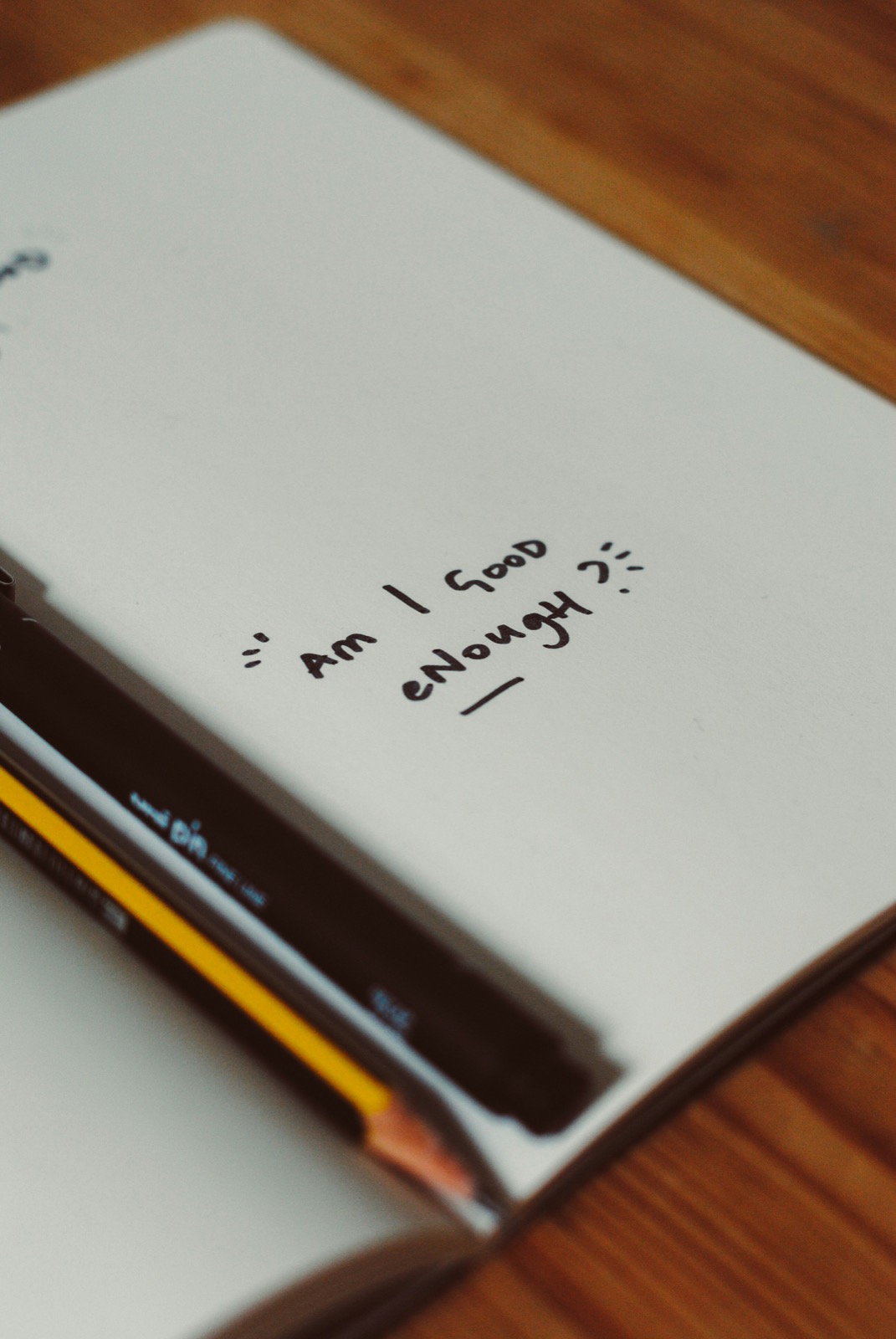
"I just don't feel good enough."
I hear this a lot. It carries weight — self-doubt, exhaustion, the sense that no matter what you do, it's never quite enough. If that resonates with you, you're not alone. And the fact that you're looking for ways to address it says something about your willingness to engage with it, which is not nothing.
Where It Comes From
Feeling like you're not good enough usually starts early. Messages from parents, teachers, peers — direct or indirect — that said you had to meet certain standards to be acceptable. Over time, those messages turn into an internal voice that questions everything you do.
The important thing to understand about this voice: it's not you. It's a collection of old messages, expectations, and fears. And it can be challenged.
Shifting the Inner Dialogue
Try this: imagine a friend told you they feel like they're not good enough. Would you tell them they're right? That they'll never measure up? Of course not. You'd be honest with them. You'd be kind.
Most people extend that kindness to others but not to themselves. When the inner critic shows up, pause and ask:
- Would I say this to someone I care about?
- Is this thought helping me or hurting me?
- What would a more balanced perspective look like?
You don't have to replace every negative thought with a positive one. That's not realistic. But you can start by questioning whether the voice is telling you the truth — or just repeating something old.
Challenge the Belief Directly
"Not good enough" is a belief, not a fact. Start testing it:
- Notice when it shows up. Are there specific situations, people, or expectations that trigger it? Patterns matter.
- Look for evidence to the contrary. The mind is very good at cataloguing failures and very bad at remembering successes. Write down times you've done well, been valued, or shown resilience. Not to inflate your ego — just to give the full picture.
- Reframe it. Instead of "I'm not good enough," try: "I'm doing my best, and my best counts." It doesn't have to be triumphant. Just honest.
Build the Outside Supports
This isn't something you have to work through alone. Surround yourself with people who see you clearly — not people who only reinforce the inner critic, and not people who tell you what you want to hear. People who are honest with you and on your side.
Practices like journaling, exercise, or creative work can also reinforce a sense of self-worth over time. Not because they're achievements to add to a list, but because they remind you that you can show up for yourself consistently.
Worth Isn't Earned
Your worth isn't something you earn. You don't have to prove it through achievement, through being useful, through being the one who never asks for help. You already have it. Healing from self-doubt takes time. You'll have better days and harder days — that's normal, not failure. Every time you choose to respond to yourself with patience instead of harshness, something shifts.
If this resonates with you
You don't have to work through it alone. Call me on 0405 023 777 or book a session online.